Hammer Drill vs Impact Driver: Differences, Uses & Which to Buy
Drillez is reader-supported. As an Amazon Associate, Drillez earns from qualifying purchases. Learn more.
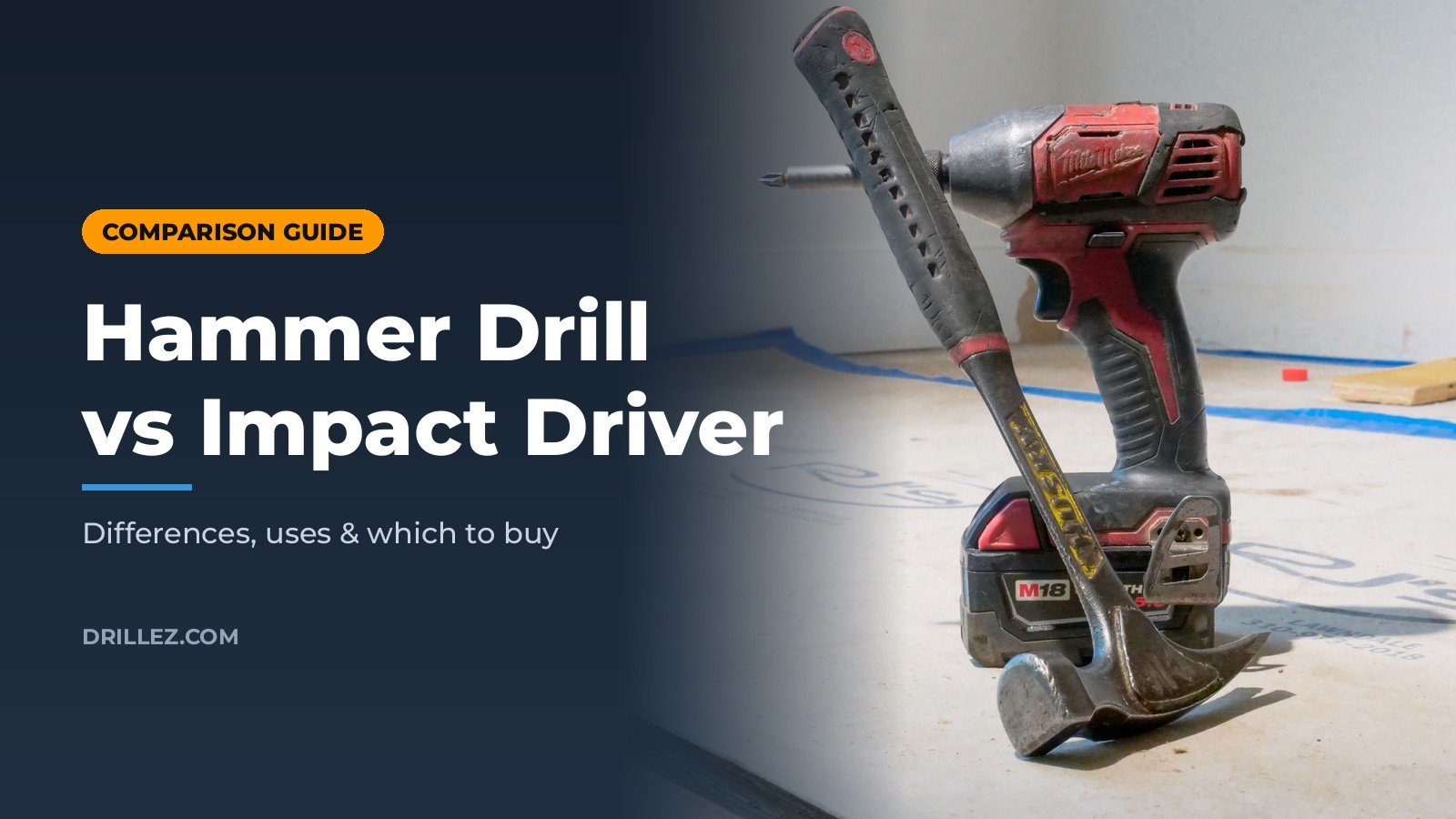
A hammer drill and an impact driver both “hammer,” both are usually cordless and both sit side by side in most combo kits — so it is no surprise that people mix them up. But they hammer in completely different directions and are built for completely different jobs. One is made to drill holes in brick and concrete; the other is made to drive long screws and bolts without wearing out your wrist.
Quick answer: choose a hammer drill if you need to drill holes, especially in masonry, concrete or brick. Choose an impact driver if you mostly drive screws, lag bolts and other fasteners. If you do both regularly, the best setup is to own both — which is why so many cordless kits include the pair.
Key Takeaways
- A hammer drill hammers forward along the bit and is the tool for drilling brick, block and concrete. Here is how to drill into a concrete wall step by step.
- An impact driver hammers around the bit and is the tool for driving long screws and bolts.
- A hammer drill has a 3-jaw chuck and clutch; an impact driver has a 1/4″ hex collet and usually no adjustable clutch.
- Neither replaces the other. Most DIYers benefit from owning both on the same battery platform.
In this guide you will learn:
- How a hammer drill and an impact driver work inside
- The key differences in torque, speed, control, bits and size
- Which tool to use for common jobs, from decks to TV mounts
- Whether you need both, and which to buy first
Hammer Drill vs Impact Driver at a Glance
| Feature | Hammer drill | Impact driver |
|---|---|---|
| Main job | Drilling holes (including masonry) and general drilling/driving | Driving screws, lag bolts and fasteners |
| Direction of the “hammer” | Forward, along the bit (axial) | Around the bit (rotational) |
| Chuck | 3-jaw chuck, usually 1/2″ | 1/4″ hex quick-change collet |
| Bits it accepts | Round, three-flat and hex shank bits; masonry bits | 1/4″ hex-shank bits only (impact-rated recommended) |
| Clutch | Yes, adjustable clutch for driving | Usually no adjustable clutch; some have speed or drive modes |
| Masonry drilling | Yes (in hammer mode) | No |
| Precision drilling in wood and metal | Excellent | Possible with hex bits, but less precise |
| Long screws and lag bolts | Possible, but can twist your wrist | Excellent |
| Size and weight | Larger and heavier | Smaller and lighter |
| Noise | Moderate (louder in hammer mode) | Loud when impacting |
What Is a Hammer Drill?
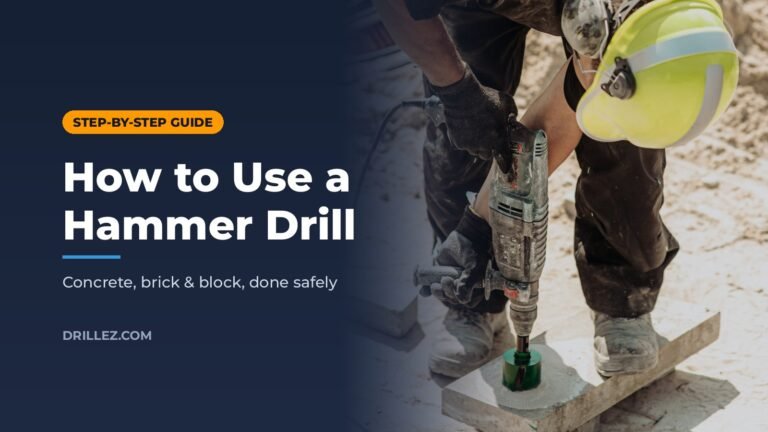
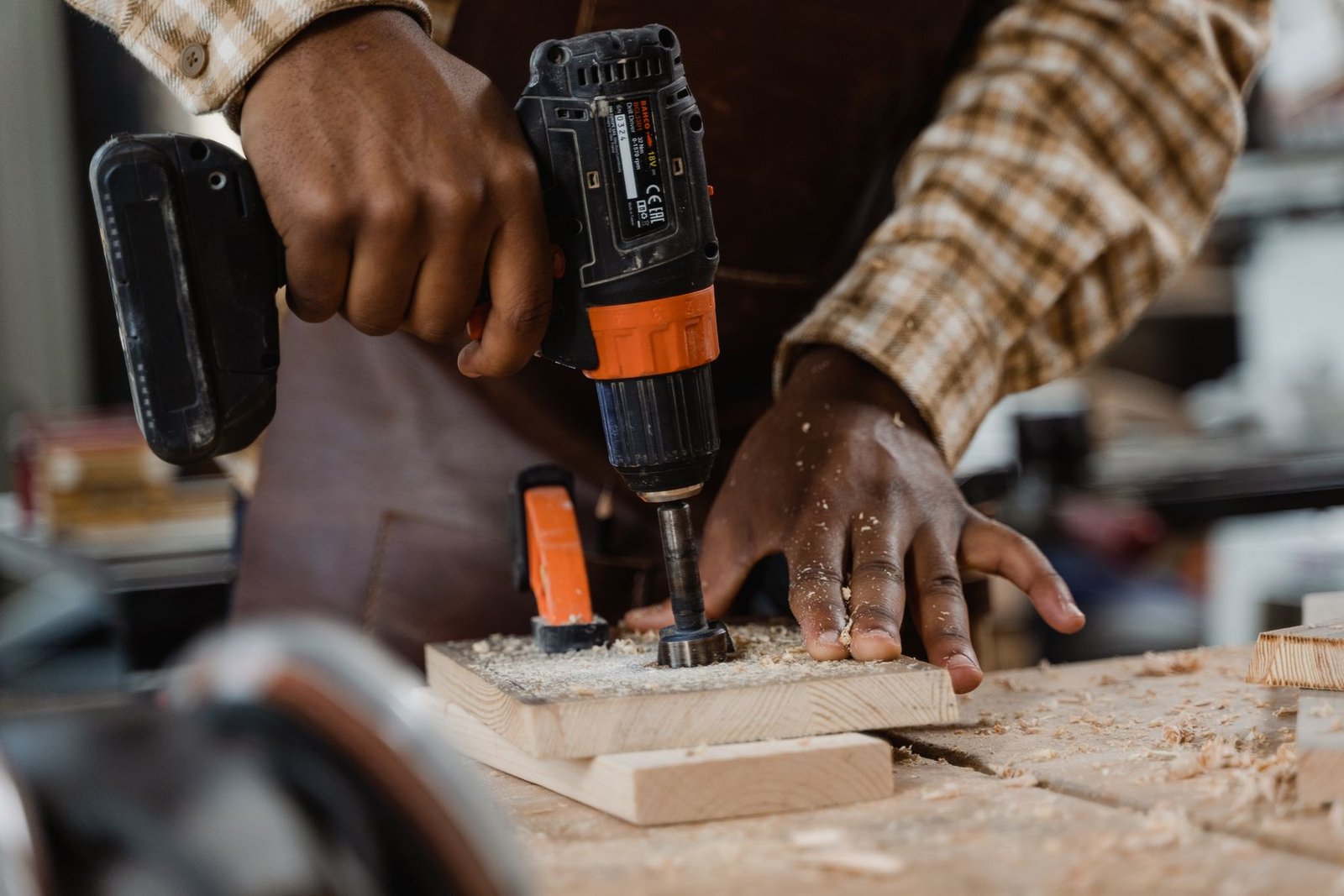
A hammer drill is a drill with an extra mode. In normal mode it works like any drill/driver: the chuck spins, and an adjustable clutch lets you drive screws without overdriving them. Switch to hammer mode, and a mechanism inside — typically two ridged discs that ride over each other — pushes the chuck rapidly forward and back while it spins. These tiny forward blows chip away at brick, block and concrete while the bit’s flutes carry the dust out. Our step-by-step guide shows how to use a hammer drill safely.
Hammer drills usually have a 1/2-inch three-jaw chuck, so they accept round-shank twist bits, masonry bits, spade bits, hole saws and hex-shank bits. That makes them the most versatile drilling tool you can own. Their hammer rate is measured in blows per minute (BPM).
What a hammer drill is best for
- Drilling holes for anchors, wall plugs and screws in brick, block and concrete
- Mounting TVs, shelves, railings and brackets on masonry walls
- General drilling in wood, metal and plastic (with hammer mode off)
- Driving screws when you need clutch control, such as on drywall or cabinets
- Mixing small batches of paint or thin-set with a paddle (at low speed)
For heavier concrete work, the next step up is an SDS-plus rotary hammer. Read our guide to the best hammer drills for concrete to see both types compared.
What Is an Impact Driver?
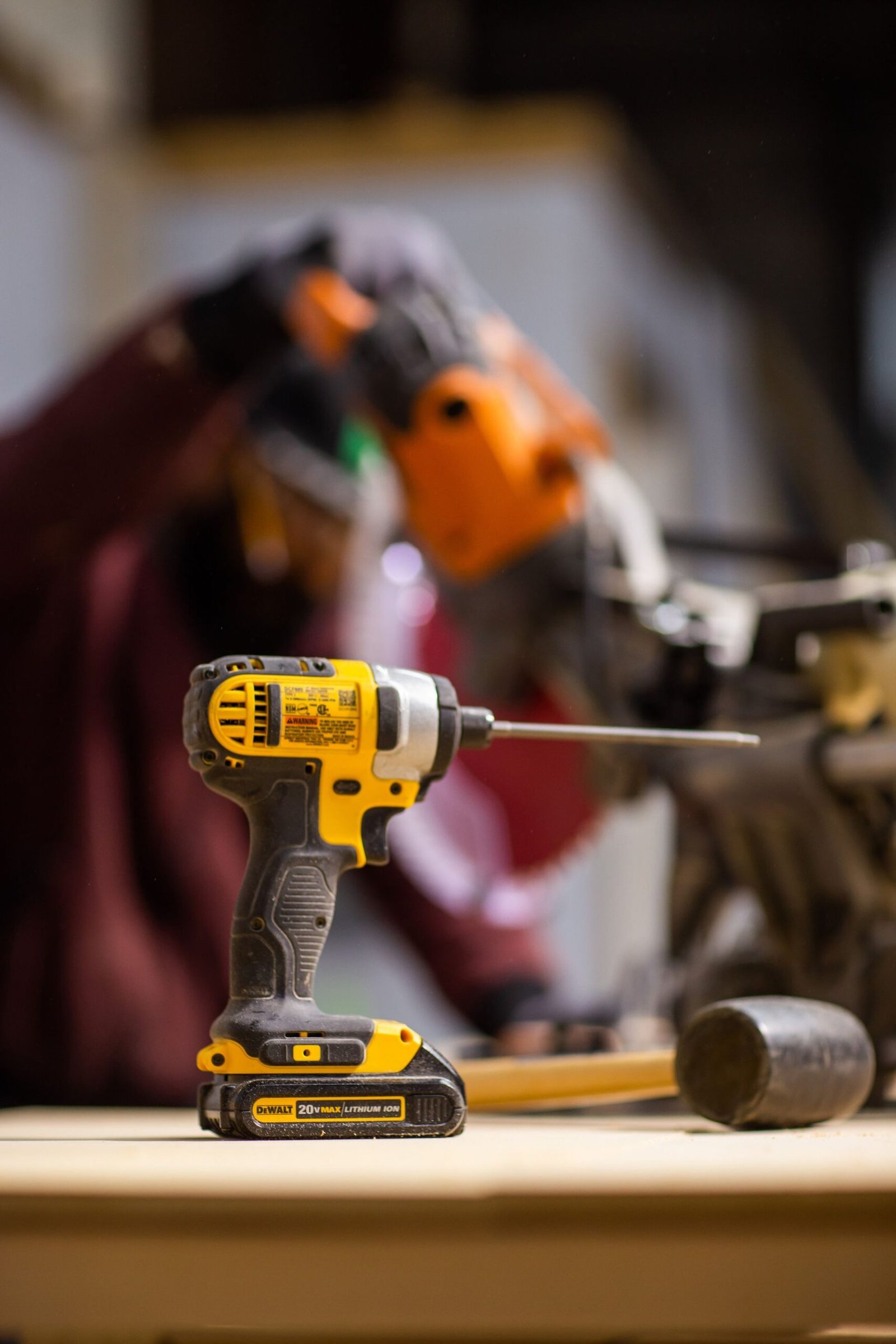
An impact driver looks like a short, stubby drill, but instead of a chuck it has a 1/4-inch hex collet that grips hex-shank bits. Inside is a spring-loaded hammer and anvil. When the screw starts to resist, the hammer releases and strikes the anvil many times per second, delivering bursts of rotational force — the “impacts” — that keep the screw turning.
Because the impacts are rotational, most of the twisting force goes into the fastener rather than back into your wrist. That is why an impact driver can sink long structural screws and lag bolts that would stall or wrench a drill. Impact drivers are rated in impacts per minute (IPM) and are usually much shorter and lighter than drills of the same voltage.
What an impact driver is best for
- Driving long deck screws, structural screws and lag bolts
- Building decks, fences, sheds and framing
- Driving many screws quickly with less fatigue
- Loosening stuck or rusted screws and small bolts
- Drilling small holes with hex-shank bits when a drill is not at hand
The Key Difference: Which Way the Hammer Hits
Both tools “hammer,” but in different directions:
- Hammer drill — forward blows (axial): the bit is pushed into the material, like tapping a chisel with a hammer while turning it. This breaks up hard, brittle materials such as concrete and brick.
- Impact driver — rotational blows (tangential): the bit is struck around its axis, like hitting a wrench handle to free a stuck bolt. This helps turn fasteners against high resistance.
This is why an impact driver cannot replace a hammer drill for concrete, and a hammer drill is not the best tool for driving dozens of long screws.
How Each Tool Works, Step by Step
Inside a hammer drill
- You set the collar to hammer mode, which engages two ridged discs (cams) behind the chuck.
- As the motor spins the chuck, the ridges ride over each other, pushing the chuck forward and back many thousands of times per minute.
- Your steady forward pressure keeps the discs engaged, so each ridge delivers a small blow into the material.
- The rotating bit clears the crushed material through its flutes.
Because the hammer action depends on the discs and on your pressure, a hammer drill works best with firm, steady force — not maximum force. Too much pushing can actually reduce the hammering effect.
Inside an impact driver
- When you start driving, the motor turns the bit directly, just like a drill.
- As the screw meets resistance, a spring-loaded hammer inside the tool slips off the anvil, then snaps forward and strikes it.
- Each strike gives the bit a sharp rotational kick, repeated thousands of times per minute.
- Between strikes the screw is not being forced against your wrist, so you feel much less twisting.
This is why an impact driver sounds quiet when it starts a screw and suddenly becomes loud and “clattery” once the screw tightens — that is the impact mechanism engaging.
Detailed Comparison
1. Torque
Impact drivers typically deliver more fastening torque than drills of the same size and voltage, and the impacts make that torque easier to control. For example, DEWALT lists 1,825 in-lbs of torque for its 20V MAX XR brushless impact driver, and Milwaukee lists up to 2,000 in-lbs for its M18 FUEL 1/4″ hex impact driver (2953-20). By comparison, Milwaukee lists 1,400 in-lbs for its M18 FUEL 1/2″ hammer drill — a very powerful drill, but still less than the impact drivers above.
Note that torque numbers are measured differently by each brand and are not directly comparable between drills and impact drivers. Use them as a rough guide.
2. Speed
Impact drivers often have high top speeds for fast driving — DEWALT lists 3,400 RPM and Milwaukee 3,900 RPM for the models above. Hammer drills usually have two or three gear ranges, with a low gear for high-torque work and a high gear for fast drilling.
3. Control and precision
A hammer drill’s adjustable clutch stops driving at a set torque, which protects soft materials and small screws. Most impact drivers do not have an adjustable clutch; instead, many offer speed settings or drive modes, and you control the result with the trigger. For delicate work — cabinet hardware, small brass screws, drywall — a drill with a clutch is usually easier to control.
4. Size, weight and fatigue
Impact drivers are compact. Milwaukee lists the 2953-20 at 4.47 inches long and 2.2 lbs (tool only), which makes it easy to use overhead and between joists. Hammer drills are longer and heavier, especially with a side handle and a large battery. Because an impact driver sends less twisting force back to your wrist, it is also less tiring for driving many fasteners.
5. Bits and accessories
Impact drivers accept only 1/4-inch hex-shank bits. Use impact-rated bits, which are designed to withstand the impacts without snapping. Hammer drills accept almost any bit with a round, three-flat or hex shank up to the chuck size, including masonry bits. See our drill bit size chart and our guide to the best drill bits for wood.
6. Noise
Impact drivers are loud when the hammer mechanism engages. Hammer drills are quieter in drill mode but loud in hammer mode. Hearing protection is a good idea with both.
7. Price
Within the same brand and battery platform, bare-tool impact drivers and hammer drills are often similarly priced. Combo kits that include both tools, a charger and batteries are usually the best value if you are starting a new battery system.
Pros and Cons
Hammer drill
Pros
- Drills brick, block and concrete
- Accurate drilling with a 3-jaw chuck
- Adjustable clutch for controlled driving
- Accepts almost any bit, including hole saws
Cons
- Heavier and longer than an impact driver
- Can twist in your hand with long screws and big bits
- Slower than a rotary hammer in hard concrete
Impact driver
Pros
- Drives long screws and lag bolts easily
- Less wrist strain and fatigue
- Compact and light
- Fast bit changes with a 1/4″ hex collet
Cons
- Cannot drill concrete effectively
- Usually no adjustable clutch
- Needs hex-shank, impact-rated bits
- Loud when impacting
Which Tool Should You Use for Each Job?
| Job | Best tool | Why |
|---|---|---|
| Drilling into concrete, brick or block | Hammer drill (or rotary hammer) | Forward blows break up masonry |
| Driving 3″ deck screws | Impact driver | High torque with less wrist strain |
| Driving lag bolts | Impact driver | Built for high-resistance fasteners |
| Drilling clean holes in wood or metal | Hammer drill (drill mode) | Chuck and clutch give accuracy |
| Hole saws and large spade bits | Hammer drill (drill mode) | Accepts large bits; side handle for control |
| Assembling furniture or cabinets | Drill with clutch | Prevents overdriving and stripping |
| Hanging drywall | Drill with clutch or drywall screw gun | Consistent screw depth |
| Removing stuck screws | Impact driver | Impacts break screws free |
| Mounting a TV on a brick wall | Hammer drill to drill, impact driver or drill to fasten | Use each tool for its strength |
Can an Impact Driver Drill Holes?
Yes, with hex-shank drill bits, an impact driver can drill small holes in wood, metal and plastic. It works for pilot holes and quick jobs, but it is less precise than a drill: there is a little play in the hex collet, the impacts can make the bit wander, and large bits are hard to control. It cannot drill concrete effectively, because its blows are rotational, not forward.
Can a Hammer Drill Drive Screws?
Yes. With hammer mode off, a hammer drill is a full drill/driver with an adjustable clutch, so it drives screws well. For long screws and lag bolts, however, it may stall or twist in your hand, and it will tire you out faster than an impact driver. Always use the side handle with large fasteners.
Real-World Project Examples
Building a deck or fence
Use a drill (or hammer drill in drill mode) for pilot holes near board ends and the impact driver for driving hundreds of deck screws. Keeping a bit in each tool saves a lot of time.
Mounting a TV on a brick or concrete wall
Use a hammer drill with a masonry bit to drill the anchor holes at the size printed on the anchor packaging. Drive the lag screws or bolts with an impact driver or the drill on a low clutch setting, being careful not to overtighten into the anchor.
Installing basement shelving on concrete
A hammer drill makes the holes for concrete screws or anchors; an impact driver drives the concrete screws quickly. For many holes in hard concrete, a rotary hammer is faster.
Assembling kitchen cabinets
A drill/driver with an adjustable clutch is the safer choice. An impact driver can easily overdrive screws and strip the soft cabinet material.
Building a shed or framing
An impact driver is ideal for structural screws and lag bolts. A drill handles hole saws for wiring and plumbing.
Hanging heavy shelves on drywall with studs
Use the drill to make pilot holes into the studs and the impact driver to drive long structural screws through the cleat into the framing. No hammer mode is needed for wood studs.
Hammer Drill Modes and Settings Explained
| Setting | What it does | Use it for |
|---|---|---|
| Drill mode (drill icon) | Rotation only, clutch bypassed | Drilling wood, metal and plastic |
| Clutch settings (numbers) | Stops driving at a set torque | Driving screws without overdriving them |
| Hammer mode (hammer icon) | Rotation plus forward blows | Drilling brick, block and concrete |
| Gear 1 (low speed) | More torque, less speed | Large bits, hole saws, driving |
| Gear 2/3 (high speed) | More speed, less torque | Small bits and fast drilling |
A good habit: start every masonry hole in drill mode to make a small dimple, then switch to hammer mode once the bit is located.
Impact Driver Bits Explained
- Driver bits: Phillips, square (Robertson), Torx (star) and slotted bits for different screw heads. Torx and square drives slip less under high torque.
- Nut drivers: hex sockets on a 1/4″ hex shank for hex-head screws and small bolts.
- Hex-shank drill bits: for small holes; choose impact-rated versions.
- Socket adapters: let you use sockets for light bolt work (an impact wrench is better for heavy bolts).
- Bit holders and extensions: magnetic holders keep screws on the bit; extensions reach into tight spots.
Impact-rated bits usually have a torsion zone that flexes slightly to absorb the impacts. Standard bits can crack or shatter under impact loads.
How Impact Drivers and Hammer Drills Compare to Other Tools
| Tool | What it does | Choose it when |
|---|---|---|
| Drill/driver | Drills and drives; no hammer function | You mostly work in wood, metal and plastic |
| Hammer drill | Drill/driver plus forward hammer action | You need occasional masonry drilling plus general drilling |
| Impact driver | Rotational impacts for fasteners | You drive lots of screws and bolts |
| Impact wrench | Larger rotational impacts with a square drive | You work on nuts and bolts, such as lug nuts |
| Rotary hammer (SDS) | Piston-driven forward blows | You drill concrete often or need larger holes |
An impact wrench is often confused with an impact driver. It uses the same rotational-impact principle but has a square drive for sockets and is designed for nuts and bolts rather than screws.
Do You Need Both?
For most homeowners and DIYers, the best combination is a drill (or hammer drill) plus an impact driver:
- Keep a drill bit in the drill and a driver bit in the impact driver. You can drill a pilot hole and drive the screw without swapping bits — a big time-saver on decks, fences and framing.
- Choose a hammer drill over a basic drill if you have brick or concrete walls, a concrete basement or garage, or masonry projects planned.
- Buy both on one battery platform so you can share batteries and chargers.
If you can only buy one tool right now: choose a hammer drill if you need to drill holes (especially in masonry), or an impact driver if your projects are mostly fastening.
Which One Should You Buy First?
| If you are… | Buy first | Add later |
|---|---|---|
| A homeowner with brick or concrete walls | Hammer drill | Impact driver |
| A homeowner in a wood-frame house doing light DIY | Drill/driver or hammer drill | Impact driver |
| Building a deck, fence or shed | Impact driver | Drill or hammer drill |
| A woodworker or furniture maker | Drill/driver with clutch | Impact driver |
| A contractor or tradesperson | Both, on one battery platform | Rotary hammer for concrete |
| Renting and making small repairs | Compact hammer drill | — |
Are Combo Kits Worth It?
Many cordless brands sell a hammer drill and an impact driver together with two batteries, a charger and a bag. If you are starting a new battery platform, a combo kit is usually cheaper than buying the same items separately. If you already own batteries, buying bare tools is often the better deal. Check that the kit includes the tools you actually want — some kits include a basic drill/driver instead of a hammer drill.
Specs to Compare When Buying
| Spec | Hammer drill | Impact driver |
|---|---|---|
| Power | Voltage (cordless) or amps (corded); torque in in-lbs | Voltage and torque in in-lbs |
| Speed | RPM in each gear | RPM and drive modes |
| Hammer rate | BPM (blows per minute) | IPM (impacts per minute) |
| Chuck / collet | 1/2″ metal chuck preferred | 1/4″ hex with one-handed bit insertion |
| Size | Length and weight with battery | Length (shorter is better in tight spaces) |
| Extras | Side handle, LED light, clutch settings | LED light, speed/drive modes, belt clip |
| Motor | Brushless for efficiency and runtime | Brushless for efficiency and runtime |
Corded vs Cordless Versions
Impact drivers are almost always cordless, because portability is the whole point and modern batteries deliver plenty of power for fastening. Hammer drills come in both versions. A cordless hammer drill is convenient and doubles as an everyday drill/driver; a corded hammer drill costs less and never runs out of power, which suits long masonry jobs near an outlet. Read our comparison of corded vs cordless drills for more detail.
Brushless or brushed?
Brushless motors use electronics instead of carbon brushes to switch the motor, which generally improves efficiency, runtime and tool life. Most premium hammer drills and impact drivers are now brushless. Brushed tools are still useful and often cheaper for light, occasional use.
Buying Tips
- Stick with one battery platform. Batteries are expensive; bare tools from the same brand save money.
- Look for brushless motors. They are generally more efficient and run longer per charge.
- For hammer drills: check chuck quality (metal is more durable), number of speeds, BPM, and whether a side handle is included.
- For impact drivers: check torque, speed or drive modes, length, and whether one-handed bit insertion is supported.
- Consider corded options for long masonry jobs near power. See our guide to the best corded drills.
Common Myths About Hammer Drills and Impact Drivers
Myth: an impact driver is just a stronger drill
An impact driver is a different tool, not a stronger drill. It is optimized for fastening, has no chuck for round bits and usually no adjustable clutch. For accurate drilling, a drill is still the better tool.
Myth: a hammer drill is only for concrete
With hammer mode off, a hammer drill is a normal drill/driver. Many people use one as their only drill and simply switch on hammer mode for the occasional masonry hole.
Myth: more torque is always better
Very high torque can strip screws, snap small fasteners and damage soft materials. Control matters as much as power, which is why drills have clutches and many impact drivers have lower-speed modes.
Myth: you can drill concrete with any drill if you push hard enough
Pushing harder mostly overheats the bit. Concrete needs forward hammering action from a hammer drill or rotary hammer and a carbide-tipped masonry bit.
Common Mistakes to Avoid
- Trying to drill concrete with an impact driver. It will barely scratch the surface and can damage bits.
- Using an impact driver on delicate work. It can snap small screws or crack trim and cabinet material.
- Leaving hammer mode on when drilling wood or metal. It makes rough, oversized holes and wears bits.
- Using non-impact bits in an impact driver. They can shatter.
- Skipping the side handle on a hammer drill when using large bits.
- Pushing too hard in hammer mode; firm, steady pressure works best.
Safety Tips
- Wear eye protection with both tools, and hearing protection when hammering or impacting.
- Use the side handle on hammer drills; a binding masonry bit can twist the tool.
- Use impact-rated bits in impact drivers; standard bits can shatter.
- Check for hidden pipes and wires before drilling into walls or floors.
- Wear a respirator rated for fine dust when drilling concrete and masonry.
How to Care for Both Tools
- Blow dust out of the vents after drilling masonry; concrete dust is abrasive.
- Keep the hex collet and chuck clean so bits seat securely.
- Replace worn driver bits; a rounded bit damages screw heads.
- Store batteries at room temperature and avoid leaving them in hot vehicles.
- Check side handles and belt clips for tightness before use.
Frequently Asked Questions
What is the main difference between a hammer drill and an impact driver?
A hammer drill delivers forward blows along the bit to drill masonry, while an impact driver delivers rotational blows to drive screws and bolts. A hammer drill has a 3-jaw chuck and clutch; an impact driver has a 1/4″ hex collet.
Can an impact driver drill into concrete?
No, not effectively. Its blows are rotational, not forward, so it cannot break up concrete. Use a hammer drill or rotary hammer.
Is an impact driver better than a drill?
It is better for driving long screws and bolts. A drill is better for drilling accurate holes and for delicate driving with its clutch.
Can I use regular drill bits in an impact driver?
Only bits with a 1/4″ hex shank fit an impact driver. For safety and durability, use bits labeled impact-rated.
Do I need a hammer drill for drywall?
No. Drywall does not need hammer action. Use a drill with a clutch, or a dedicated drywall screw gun, to set screws at a consistent depth.
Which is better for building a deck?
An impact driver is ideal for driving deck screws, while a drill is useful for pilot holes. Many builders use both together.
Is a hammer drill the same as a rotary hammer?
No. A rotary hammer uses a piston to deliver much harder blows and uses SDS bits. It drills concrete much faster than a hammer drill.
What is IPM on an impact driver?
IPM means impacts per minute — how many rotational blows the hammer mechanism delivers each minute.
What is BPM on a hammer drill?
BPM means blows per minute — how many forward blows the hammer mechanism delivers each minute in hammer mode.
Are impact drivers good for beginners?
Yes, for driving screws they are easy to use and less tiring. Beginners should practice on scrap wood, because the high torque can overdrive screws quickly.
Can I use an impact driver for lug nuts?
Most impact drivers are not designed for automotive lug nuts. An impact wrench with the right socket is the correct tool for that job.
Does a hammer drill work as a regular drill?
Yes. Turn hammer mode off and it works as a standard drill/driver, including the adjustable clutch for driving screws.
Why is my impact driver stripping screws?
Common causes are worn bits, the wrong bit for the screw head, too much speed, or not pushing the bit firmly into the screw. Use Torx or square-drive screws where possible and a lower speed setting.
Can I use a hammer drill on tile?
Drill tile with hammer mode off, using a tile or diamond bit. Switch to hammer mode only after you are through the tile and into the masonry behind it.
Which is better for beginners, a hammer drill or an impact driver?
For a first tool, a hammer drill is usually more versatile because it drills, drives and handles masonry. Add an impact driver when you start projects with many screws or bolts.
Can I use a hammer drill instead of an impact driver?
For occasional screws, yes — use drill mode with the clutch and a low gear. For long structural screws, lag bolts or a full deck, an impact driver will be faster, easier on your wrist and less likely to strip screw heads.
Final Verdict
The difference comes down to direction and purpose. A hammer drill hammers forward to drill holes, including in brick and concrete, and doubles as a precise drill/driver. An impact driver hammers around the bit to drive screws and bolts with less effort, especially on decks, fences, sheds and framing projects. If your work includes both drilling and heavy fastening, owning both — ideally on the same battery platform — gives you the best of each. For concrete-heavy work, add an SDS-plus rotary hammer when your projects grow beyond a few holes at a time.
Specifications quoted are from the manufacturers’ product listings, checked on November 26, 2026. Torque figures are measured differently by each brand and are for general comparison only.