How to Use a Screw Extractor Drill Bit to Remove a Stripped Screw
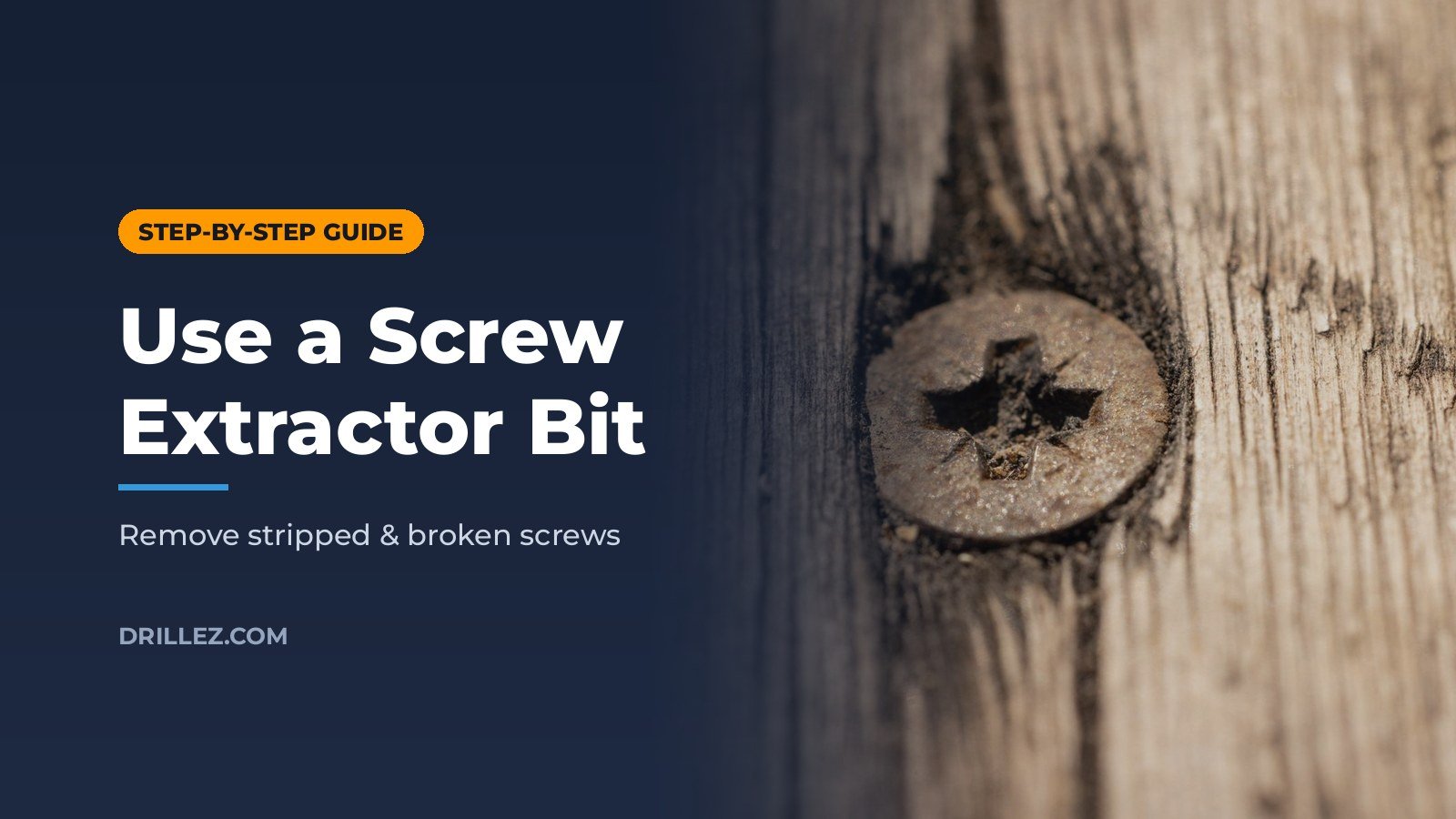
A stripped screw head can stop a simple job dead. A screw extractor is a small, hardened bit that bites into the damaged screw and turns it out backwards. Used correctly, it removes most stripped wood screws in under a minute. Used wrongly, it can snap off inside the screw and make the problem worse.
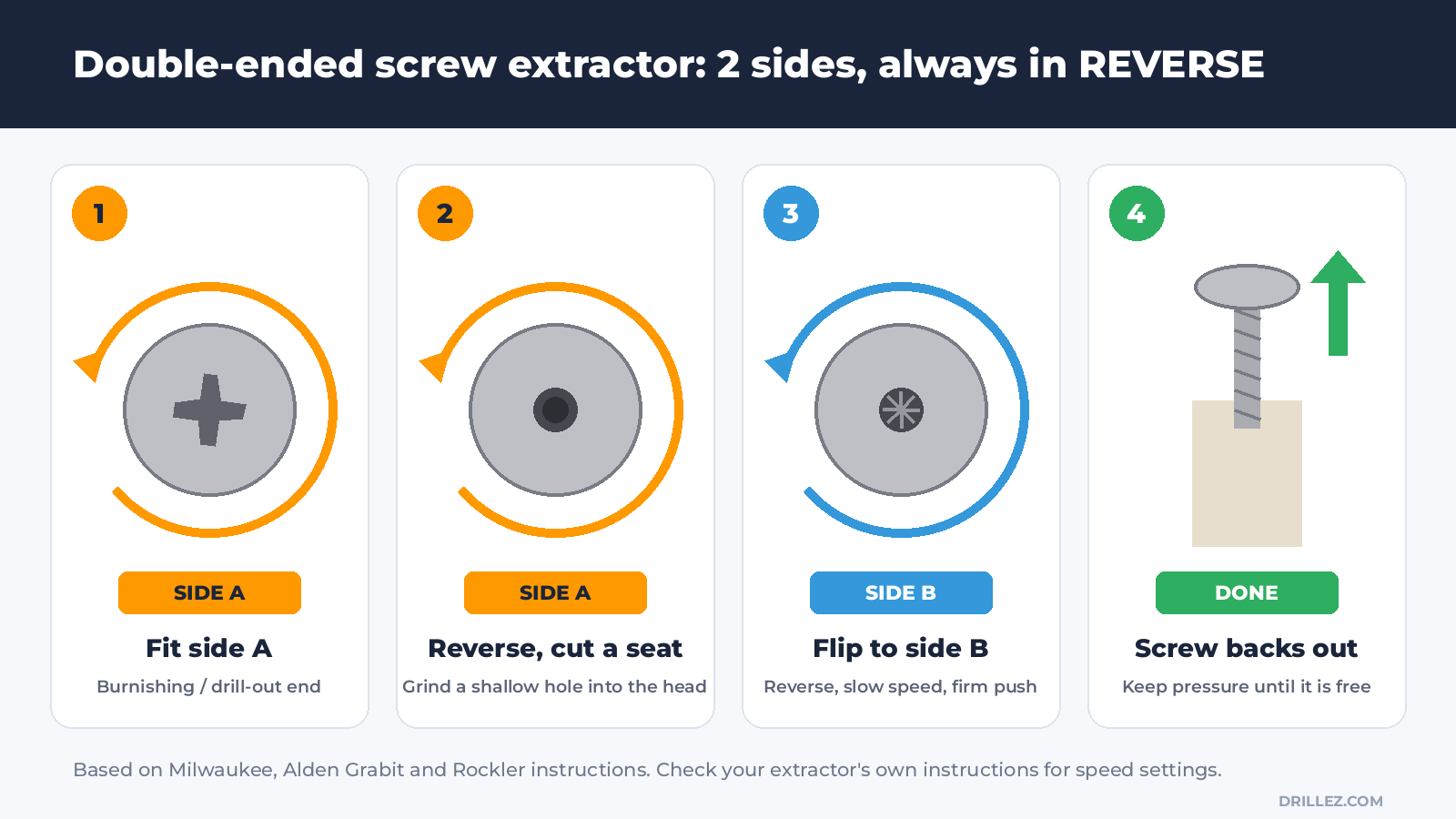
Quick answer: set your drill to reverse. Use the burnishing end (side A) to cut a small seat into the screw head, then flip the bit to the extractor end (side B). Push firmly and run the drill slowly in reverse until the extractor grips and the screw backs out. For spiral extractors, drill a pilot hole with the size stamped on the extractor, then turn the extractor counterclockwise with a tap wrench or drill.
Two Types of Screw Extractor
| Type | How it works | Best for |
|---|---|---|
| Double-ended (burnish and extract) | One end grinds a seat in the screw head; the other end bites in and turns the screw out. Both ends run in reverse. | Stripped wood screws; the most common type in DIY kits (Milwaukee, Alden Grabit and similar) |
| Spiral (fluted) extractor | You drill a pilot hole first, then the tapered left-hand spiral wedges in as you turn it counterclockwise. | Broken screws and bolts, larger fasteners (IRWIN HANSON and similar) |
| Straight-flute or square extractor | Driven into a pilot hole and turned with a wrench; the flutes grip without spreading. | Heavier bolts and studs in metal |
Before You Use an Extractor
- Stop as soon as the bit slips. As Bob Vila notes, every slip makes the head worse and the screw harder to remove.
- Check the screw type. Alden says its Grabit extractors are not designed for hardened screws, and Milwaukee describes its double-ended bits for stripped screws in soft wood.
- Clamp loose work. Small parts can spin with the drill.
- Wear safety glasses. Metal shavings fly, and hardened cutting tools can shatter.
- Have the right drill settings ready: reverse direction, and low speed for the extracting step. Our guide to what the numbers on a drill mean explains the speed switch.
How to Use a Double-Ended Screw Extractor (Step by Step)
1. Pick the right size
Match the extractor to the screw. Milwaukee’s double-ended set, for example, lists #1 for No. 4 to 7 screws, #2 for No. 8 to 10, #3 for No. 11 to 14 and #4 for No. 16 to 24. Alden’s Grabit chart is similar. If you are unsure, start with the size that fits inside the screw head without touching its edge.
2. Set the drill to reverse
Both ends of a double-ended extractor are made to cut counterclockwise. Alden’s instructions are explicit: drill rotation must be in reverse.
3. Cut a seat with side A
Fit the bit with the burnishing or drill-out end (side A) facing out. Hold the drill straight, press into the center of the screw head and run it in reverse to grind a small, clean hole. Rockler suggests going about 1/16 in deep. Milwaukee runs this step at high speed, while Alden and Rockler use a slow speed, so follow your own kit’s instructions.
4. Flip to side B
Remove the bit, turn it around and fit the extractor end (side B). Keep the drill in reverse and switch to low speed. If your chuck is giving you trouble, see how to change a drill bit.
5. Push firmly and drill slowly
Press the extractor straight into the seat with firm downward pressure, then start the drill slowly. The left-hand threads bite into the screw and, as the grip increases, start to turn it out. Keep pushing until the screw is free of the wood.
6. Remove the screw from the bit
The screw usually stays stuck on the extractor. Milwaukee warns that the bit and screw may be hot, so wear gloves, and remove the battery before freeing the screw.
If it does not grip
Milwaukee suggests repeating the seat cut, trying the next size up, or pressing sideways against the drilled head for more bite. Do not force it: the extractor is hardened, and a broken tip is very difficult to drill out.
How to Use a Spiral (Fluted) Screw Extractor
- Center-punch the middle of the broken screw or bolt so the drill bit does not wander.
- Drill a pilot hole with the size stamped on the extractor shank (Black+Decker’s instructions) or listed on the package. Keep the drill straight. IRWIN recommends a left-hand drill bit, which sometimes backs the screw out on its own.
- Drill deep enough for the extractor to grip without bottoming out, as IRWIN puts it.
- Insert the extractor and turn it counterclockwise with a tap wrench, adjustable wrench or a drill in reverse at low speed. The tapered spiral wedges in and then turns the screw.
- Turn steadily. If it will not move, stop rather than forcing it; apply penetrating oil to rusted fasteners and try again.
Pilot drill sizes for IRWIN HANSON spiral extractors
| Extractor | Pilot drill | Screw or bolt size |
|---|---|---|
| EX-1 | 5/64 in | 3/32 to 5/32 in (No. 3 to 6) |
| EX-2 | 7/64 in | 5/32 to 7/32 in (No. 6 to 12) |
| EX-3 | 5/32 in | 7/32 to 9/32 in |
| EX-4 | 1/4 in | 9/32 to 3/8 in |
| EX-5 | 19/64 in | 3/8 to 5/8 in |
| EX-6 | 13/32 in | 5/8 to 7/8 in |
Source: IRWIN HANSON spiral extractor chart. Other brands use different sizes, so always use the drill size that comes with your extractor. Our drill bit size chart converts these fractional sizes to millimeters.
Common Mistakes
- Running the drill forward. Extractors cut and grip only in reverse; forward drives the screw tighter.
- Too much speed when extracting. Slow speed and firm pressure give the threads time to bite.
- Prying or bending the extractor. It is hard and brittle; side loads can snap it.
- Wrong pilot hole size. Too small and the extractor can break; too large and it cannot grip.
- Skipping the center punch on broken screws, so the pilot hole drifts off center.
- Using an extractor on hardened screws that the manufacturer says it is not designed for.
If the Extractor Breaks
A broken extractor is harder than ordinary drill bits, so it is very difficult to drill out. Stop and avoid making it worse. Depending on the job, you can leave the screw in place and fix beside it, cut around the screw with a small plug cutter or hollow bit and fill the hole with a wooden plug, or take a metal part to a machine shop.
Frequently Asked Questions
Do you use a screw extractor in forward or reverse?
Reverse. Both ends of a double-ended extractor and the spiral type are made to work counterclockwise.
Can you use a screw extractor with a drill?
Yes. Double-ended extractors are made for a drill or, for small sizes, an impact driver at low speed, as Milwaukee notes for its #1 to #3 sizes. Spiral extractors can be turned with a tap wrench or a drill in reverse at low speed.
Do you hammer in a screw extractor?
Not for double-ended extractors. You may tap a center punch to mark broken screws, and some straight-flute extractors are driven into the pilot hole, but follow the instructions for your specific type.
What speed should I use?
Low speed for the extracting step, with firm pressure. Check your kit for the seat-cutting step, because brands differ.
Why won’t my screw extractor grip?
The seat may be too shallow, the extractor may be too small, or there may not be enough downward pressure. Try deepening the seat or the next size up, and push harder while drilling slowly.
What drill bit do I use for a screw extractor?
Use the pilot drill size stamped on the extractor or listed in its chart. A left-hand drill bit is a good choice because it turns in the removal direction. Our guide to types of drill bits explains the options.
Summary
For a stripped wood screw, use a double-ended extractor: drill in reverse with side A to cut a seat, then flip to side B and back the screw out slowly with firm pressure. For broken screws and bolts, drill the right pilot hole and turn a spiral extractor counterclockwise. Go slow, keep the drill straight, wear safety glasses, and never force a hardened extractor.